Thoroughbred Racing State of the Union
A look at Thoroughbred Racing as we begin the Summer of 2026
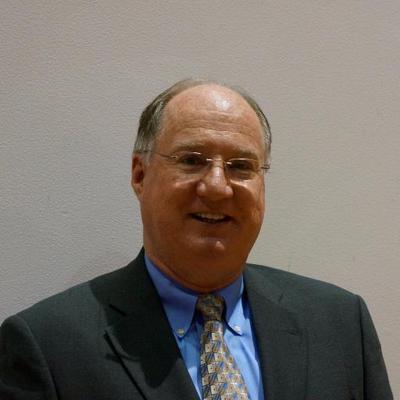
William G. Gotimer, Jr.
THE KENTUCKY DERBY
With Golden Tempo’s come-from-behind victory in the Kentucky Derby, the 2026 thoroughbred racing season kicked off in earnest. Seeing the old-line Phipps silks in the winner’s circle with both a female trainer and a female Phipps family member leading the operation was truly a blend of old and new – tradition and modern times blended into one. Respecting the past while embracing the future.
Daisy Phipps Pulito’s interview in the winner’s circle was a reminder that whatever your view of the old guard, it is undeniable that they know how to both win and lose races with dignity and grace. Her comments were reflective of a time when sportsmanship was as important as winning and acting like you had been to the winner’s circle before was important.
Making the rounds on the main stream media after the victory, trainer Cherie DeVaux performed admirably by giving intelligent, thoughtful answers without the silliness so often needlessly injected when racing gets the spotlight. Her diplomatic correction of the Today Show interviewer when he spoke about the Belmont Stakes being “two furlongs longer than the Derby” was subtle yet firm – treating both the interviewer and the audience with respect.
Mike Repole emphatically consoled his rider Irad Ortiz who finished second, with a kindness that is often lacking in modern sporting events. Recognizing that no one takes a loss harder than the proverbial “man in the arena” Repole hid his own disappointment and frustration by loudly and repeatedly telling the top rider “there will be other chances”, which of course is what racing and sports (and life) is all about.
Notably a less famous face emerged from the replay of trainer DeVaux watching the stretch run unfold. Next to DeVaux was Alysse Jacobs who has been involved in and a part of racing for most of her adult life. Jacobs is the type of knowledgeable fan this sport engenders and if there was any doubt of her ability to diagnose a race, one only needs to read her lips when she yells “get outside Jose!’ just prior to Jose Ortiz doing just that thereby finding a clear path to run down the leaders.
Racing showed well on this first Saturday in May. But alas (there is always a “but”, right?) immediately after this afterglow subsided, serious issues in racing again moved to the fore.
THE PREAKNESS
The most immediate debate to surface is the absence of the Kentucky Derby winner from the Preakness due to the Preakness’ traditional and current spacing among the Triple Crown races. Like the connections of the Kentucky Derby winner last year, the connections of Golden Tempo have opted to skip the Preakness and await the Belmont at Saratoga – run at the same distance as the Derby.
Not a surprise.
A disappointment? Maybe.
Running back on short notice is not in the connections’ playbook, and their long and deep connections to New York racing make the Belmont Stakes and/or Travers Stakes more desirable goals. They were careful not to be disrespectful to the Preakness but acknowledged the toll the Derby took on their horse thereby implicitly confirming they did not have Triple Crown expectations of their charge.
The reality is that a Triple Crown pursuit cannot reasonably arise only after a Kentucky Derby win. The spacing of the races is such that Triple Crown winners or even those that compete in all three Triple Crown classics need to go into the Derby slightly undertrained so as not to “squeeze the lemon dry” in the Derby. Of those that approach the Derby with something in reserve, Seattle Slew was notably undertrained for the Derby to assure enough stamina for both their Preakness and the Belmont runs. The same can be said of American Pharoah and Justify. Golden Tempo had no such luxury and while no doubt pleased by the Derby win his connections will realistically seek to duplicate the path Sovereignty took last year of targeting the Belmont Stakes and the Travers Stakes on the way to Three-Year-Old and/or Horse of the Year.
Where does that leave the Preakness?
Times change, things evolve. It remains to be seen whether the Preakness can survive changing its spot on the calendar to accommodate the modern horse and trainer patterns without losing its long-standing “Right of Spring” celebration with college students and Marylanders before the oppressive heat of the summer descends. One only hopes that any change will be constructive to the sport and the Triple Crown series. Cooperation among racing officials will be required. Let’s hope it occurs – it often does not.
CHALLENGES TO THE RACING ESTABLISHMENT
Speaking of cooperation, an internecine battle among heavyweight racing participants is playing out publicly and on social media. The aforementioned Mike Repole, with an ally in West Lake Racing Stable’s Louis Masry, are publicly and aggressively challenging the “racing establishment” by taking on the old guard Jockey Club, the established Breeders’ Cup and the newly formed Horseracing Integrity and Safety Authority, better known as HISA.
Repole’s challenge has been sustained and relentless and done with the straightforwardness that graduates of St. John’s University (my alma mater) are known for. Masry’s approach is the “nuts and bolts” analysis of an accountant (my major). Both vow to pursue their efforts to assist the sport undeterred by personal criticism or awkward interactions within the game. Both have the means to do so. Each has a list of actions they want to see pursued by the leaders of the sport, with Masry highlighting the significant financial reserves held the Jockey Club and the Breeders’ Cup. To paraphrase his position, “the time to use a rainy-day fund is when it has been raining nonstop for a long time.”
Leaders in any endeavor will tell you that conflict among caring participants produces good results – as long as those conflicts do not prevent teamwork becoming counterproductive. The best leaders successfully balance both aims producing buy-in by all who felt fairly heard. As of this writing, there is a meeting scheduled for June in Saratoga between the Jockey Club and Repole. Experience tells us the devil is in the details and as of now there are plenty of devilish details to be ironed out but for now we can hold out hope that the meeting will produce some constructive results.
COMPUTER ASSISTED WAGERING
The issue of betting syndicates using algorithmic last minute hedging bets by use of high-speed computer betting continues to wear down the other bettors. These groups, known by the acronym CAW, standing for Computer Assisted Wagering, consistently grind out profits that at least theoretically come from other bettors both financially and emotionally. I say “theoretically” because it is unclear whether the CAWs profit through the betting or through volume rebates granted to them by the racetrack operators. Regardless of the source of their income, they do not seem to be going away anytime soon, and the nature of their operation proves frustrating to other bettors and fans since their large last second wagers cause significant fluctuations in the odds – showing up sometimes after a race has begun. This causes suspicion from some gamblers and frustration from most.
The recent Kentucky Derby undercard was not immune from this occurrence when Japanese invader T O Elvis scored an emphatic victory in the Churchill Downs Stakes with his odds reducing from a healthy 12-1 when in the gate to a far less generous 5-1 when he crossed the finish line. One very sophisticated player told me directly in colorful language how dispiriting this was. It can take the joy out of winning – which is itself a feat.
The problem is not an easy one to solve. The racetracks heavily rely on the volume of money bet by these groups and are loath to lose them. For all the protestations by the CAWs that they “have no real advantage”, it seems to be widely accepted (or feared) that eliminating that which is “no real advantage” would make the CAWs bet elsewhere. The racetracks fear playing with fire, with the one exception of the New York Racing Association which has taken strong steps to restrict the timing of the computer assisted teams’ wagers in many pools.
Clearly the NYRA hoped it would provide thought leadership, and others would follow, but so far, either through lack of gumption or lack of acknowledgement that it is a real problem, others have not done so. I fear the logical endpoint of this may be everyone betting as part of a CAW team – a dystopian future of betting on horse racing that is as boring as watching certificates of deposit mature. There is no easy solution, but it is in my opinion an existential threat to horse racing as an entertaining wagering vehicle.
The OCTAFECTA or JACKPOT 8
Racing’s latest gimmick bet is the Octafecta or Jackpot 8. As its name implies, it requires a bettor to select the exact finish of the first eight finishers in a race, and under certain circumstances the winner wins a “jackpot”. It is not a serious bet as no handicapper would seriously try to select the exact order of the first eight finishers. It is designed solely to create large payouts and this week it did – with Churchill Downs posting a $691,000 payout to a single $1 player not associated with CAWs. Such large payouts tend not to return through the betting windows and immediately leave the sport, which in my opinion is not something the game should celebrate.
To me a question comes to mind when the advocates of the Octafecta openly claim “it’s like a lottery ticket”. That question is, “Then why is that permitted?” As a society we have reserved the right to run lotteries to governmental entities. No doubt many for profit entities would like to run a lottery (given its economics I would volunteer to run the Powerball) and it seems unseemly to me for racing to attempt to run a lottery disguised as a horse racing bet.
ED DEICKE – KENTUCKY DERBY BETTING CHALLENGE WINNER
One of the most astute handicappers I know used his acumen to make a bold win bet on Golden Tempo to win the Kentucky Derby, netting both a pari-mutual return of over $73,000 and the first prize in the contest of $127,000 for a $200,000 haul. Deicke, who in the world of “sharps” and “squares” is the sharpest of the sharp, used game theory to win the contest and handicapping savvy to pick the winner. Deicke, who has a home in Saratoga and picks up more than his share of dinner tabs, is a worthy winner. Congratulations to him.
About the author – Bill Gotimer makes his home in Saratoga Springs with his wife Elise. Both are practicing attorneys and Bill regularly writes articles on horse racing and entertainment.
CLICK HERE TO SIGN UP FOR SARATOGA REPORT’S FREE EMAIL SUBSCRIPTION
CLICK HERE FOR SARATOGA REPORT’S X.com (FKA TWITTER) PAGE
CLICK HERE FOR SARATOGA REPORT’S FACEBOOK PAGE